

AIR COMPRESSOR
& PIPES LEADER
& PIPES LEADER

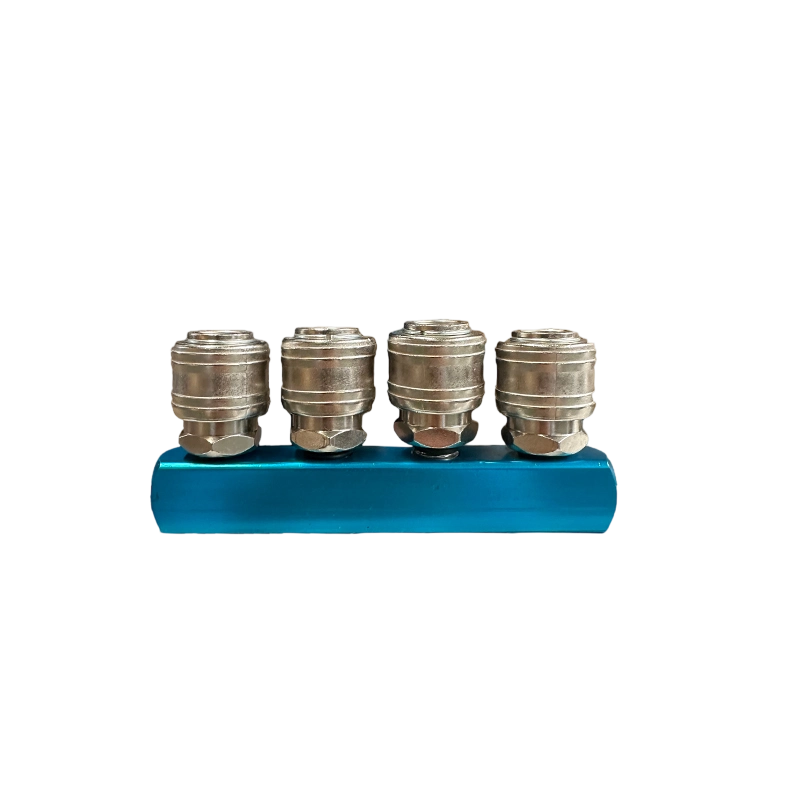
In the field of pipeline installation, "take-off and exhaust" may refer to the parallel hose assembly in a gas sampling or exhaust system, while "three-row, four-row, five-row" typically describes the number of pipelines arranged side by side, commonly seen in pneumatic equipment accessories or ventilation systems.
The specification and selection of side-by-side pipeline components require comprehensive consideration of multiple factors: These components generally use materials such as PVC hoses, support various configurations ranging from three to six rows, and possess high temperature resistance, oxidation resistance, and corrosion resistance characteristics. Their length and interface form can be customized according to requirements; when selecting, the number of rows needs to be determined based on gas flow rate, pressure requirements, and spatial layout. Increasing the number of rows can improve ventilation efficiency but will increase the installation space requirement.

The key points of installation and maintenance include: during installation, ensure that the pipes are neatly arranged, avoiding twisting or excessive stretching, and reserve sufficient expansion and contraction allowance to accommodate thermal expansion and contraction; the connections need to be sealed reliably to prevent leakage, and fixed in accordance with safety specifications; during maintenance, regularly inspect the aging and wear of the pipes, replace damaged parts in a timely manner, and keep the components clean to ensure smooth air flow.
When linking with other systems, it should be noted that in the HVAC system, a concept similar to "row tubes" is also applied to the heat exchanger of fan coil units. The number of rows (such as two or three rows) affects the heat exchange area and the cooling/heating effect, but the multi-row configuration in pipeline installation focuses more on parallel ventilation function rather than heat exchange.
No. 500, Zhengyang Middle Road, Chengyang District, Qingdao
