

AIR COMPRESSOR
& PIPES LEADER
& PIPES LEADER

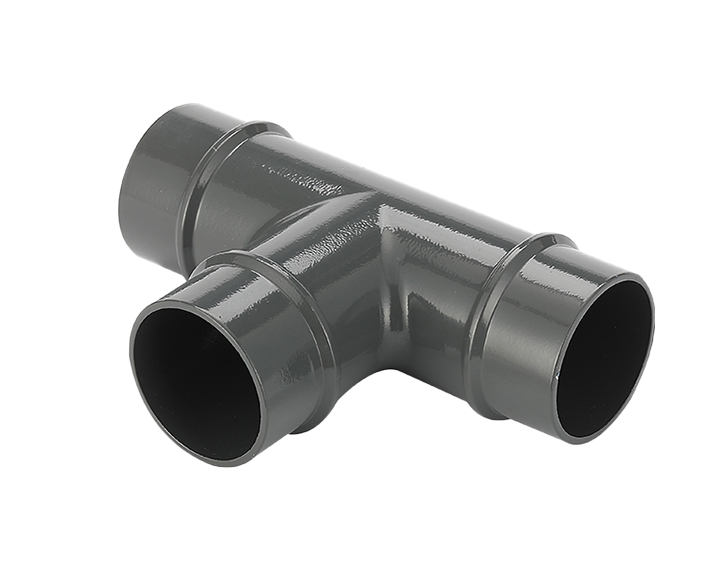
An equal diameter tee is a pipe connection element used to divide a pipe into three branches of equal diameter or to merge three pipes into one pipe, wherein the diameters of the three branches or merging pipes are equal.
An equal diameter tee typically consists of a main pipe and two branch pipes. The main pipe and branch pipes have the same diameter, allowing the fluid to flow smoothly without loss of flow.
The advantages of equal diameter tees include:
1. Easy connection: The design of equal diameter tees simplifies pipe branching and merging connections, allowing for quick installation and disassembly.
2. Reduced flow resistance: Because the branching and merging pipe diameters of an equal diameter tee are equal, flow resistance losses at these points are minimal, reducing pressure loss.
3. Improved fluid transport efficiency: Thanks to its streamlined design and smooth fluid flow, equal diameter tees improve the transport efficiency of pipeline systems.
During engineering design and installation
factors such as fluid flow rate, pressure requirements, and pipe material must be considered to ensure the normal operation and safety of the equal diameter tee.
In summary, an equal diameter tee is a connecting element used to divide a pipe into three branches of equal diameter or to merge three pipes into one. Due to its convenient connection, reduced flow resistance, and improved fluid transport efficiency, the equal diameter tee plays an important role in piping systems.
| Model | A(mm) | B(mm) | C(mm) |
| DN20 | 98 | 61 | 49 |
| DN25 | 104 | 67 | 52 |
| DN40 | 143 | 94 | 72 |
| DN50 | 155 | 105 | 78 |
| DN63 | 214 | 144 | 107 |
| DN80 | 233 | 162 | 117 |
| DN100 | 257 | 183 | 129 |
| DN125 | 310 | 225 | 155 |
| DN148 | 322 | 241 | 161 |
| DN200 | 386 | 299 | 193 |
No. 500, Zhengyang Middle Road, Chengyang District, Qingdao
